Marble Runs vs. Building Sets: A Comparative Exploration of Play, Creativity, and Learning
Introduction: The Architecture of Play
In the landscape of childhood playthings, few categories spark as much debate among educators, parents, and toy enthusiasts as the classic distinction between marble runs and building sets. On the surface, both appear to offer similar benefits: hands-on construction, spatial reasoning, and hours of immersive fun. Yet a closer examination reveals profound differences in how these toys engage young minds, what skills they cultivate, and the kinds of imaginative worlds they make possible. Marble runs—those intricate pathways of tracks, tubes, and ramps designed to guide a marble from top to bottom—are often pitted against building sets like LEGO, wooden blocks, or magnetic tiles, which offer open-ended construction possibilities. This article unpacks the unique affordances of each, comparing them across dimensions such as creativity, problem-solving, physics learning, aesthetic appeal, social play, and long-term engagement. By the end, readers will have a nuanced understanding of when a marble run might be the superior choice and when a building set better serves the developing mind.
The Fundamental Differences in Design Philosophy
Structured Paths vs. Open-Ended Structures
At its core, a marble run is a goal-directed toy. The primary objective is to create a functional system that successfully transports a marble from a starting point to an end point, often through loops, drops, and twists. This constraint—the need for continuous motion—imposes a clear but rewarding challenge. The design of a marble run is essentially a physics problem: How can I use gravity, momentum, and angles to keep the marble moving? The answer requires careful alignment of track pieces, consideration of slope steepness, and trial-and-error adjustments. The "success condition" is binary: the marble either reaches the bottom or it does not.
In contrast, a building set is fundamentally open-ended. A box of LEGO bricks, wooden unit blocks, or magnetic tiles does not come with a predetermined goal. The child decides what to build: a castle, a spaceship, a bridge, or an abstract sculpture. The process is governed by imagination rather than by a physical law. While some building sets have instructions for specific models, the most creative play happens when those instructions are abandoned. This lack of inherent constraints means that building sets can support an infinite variety of outcomes, making them ideal for narrative play, role-playing, and artistic expression.
The Role of Failure and Iteration
In marble runs, failure is immediate and visible. A marble that flies off a track, gets stuck in a loop, or rolls backward offers clear feedback. This teaches children the principles of cause and effect in a concrete way. Adjusting a ramp angle by a few degrees can transform a frustrating failure into a satisfying success. The iterative cycle—build, test, fail, adjust, retest—is a microcosm of the engineering design process. For children who thrive on clear goals and measurable progress, marble runs provide a powerful sense of accomplishment.
Building sets, on the other hand, rarely have a moment of "failure" because there is no external standard of correctness. A tower may topple, but that is a learning opportunity in structural stability, not a judgment of the builder. The child can simply rebuild it differently. The reward in building sets comes from the act of creation itself, from the visual or functional outcome, and from the stories that emerge around the construction. Failure is softer, more forgiving, and often leads to redirection rather than correction.
Cognitive and Educational Benefits Compared
Physics and Engineering Concepts
Marble runs are arguably superior for teaching physical science intuition. When children experiment with different slopes, they are internalizing concepts of gravitational potential energy and kinetic energy. When they add a loop-the-loop, they experience centripetal force. When they combine multiple tracks with junctions, they learn about path branching and conservation of momentum. The tangible, three-dimensional nature of marble runs makes abstract physics palpable. A child who observes that a marble only completes a loop if it enters with sufficient speed has, in effect, grasped a fundamental principle of mechanics.
Building sets, depending on their type, also teach physics—particularly statics and structural engineering. A block tower’s stability depends on the distribution of weight, the strength of joints, and the balance of forces. Magnetic tiles introduce concepts of polarity and magnetic attraction. LEGO bricks teach friction, interlocking, and load-bearing. However, the physics lessons from building sets are more about equilibrium and symmetry than about dynamics and motion. Marble runs bring *motion* to the forefront, which is often more engaging for children because it generates immediate visual excitement.
Spatial Reasoning and Problem-Solving
Both toy categories excel at developing spatial reasoning, but they do so in different ways. Marble runs require children to think in four dimensions: the three spatial dimensions plus the dimension of time (the path the marble will follow). They must anticipate how a marble will behave as it moves through a vertical and horizontal network. This is a complex mental modeling task. Building sets, meanwhile, train spatial skills more in static arrangement: visualizing how a 3D shape can be assembled from 2D components, estimating sizes, and mentally rotating objects. Both are valuable, but the dynamic nature of marble runs adds a layer of cognitive challenge that building sets do not typically offer.
Problem-solving in marble runs is often linear and goal-oriented: "How do I get the marble from point A to point B without it falling?" The solution may involve rearranging pieces, adding supports, or changing the order of elements. In building sets, problem-solving is divergent and open-ended: "How can I build a bridge that spans this gap?" There may be many valid solutions, and the child must decide which one best matches their vision. The former encourages convergent thinking; the latter encourages divergent thinking. A balanced child development likely benefits from exposure to both.
Creativity: Constraint-Driven vs. Imagination-Driven
Creativity is often misunderstood as purely free-form imagination, but constraints can actually fuel creative innovation. Marble runs impose a strong constraint—the marble must roll—so children must creatively solve how to achieve that within the limits of their pieces. They might invent a new way to transfer the marble from one track to another, or design a spiral using pieces meant for straight paths. This is constrained creativity, akin to writing a sonnet with a fixed rhyme scheme.
Building sets, especially classic wooden blocks or LEGO, offer unconstrained creativity. There is no "correct" way to use a 2×4 brick. A child can build a realistic model of a house or an abstract blob of color. This freedom encourages storytelling, aesthetic exploration, and even emotional expression. A child who builds a fortress after a scary movie is processing feelings through construction. Building sets thus support psychological and narrative development in ways marble runs do not.
However, it is worth noting that many modern marble run sets include elements like funnels, gears, or sound-making pieces, which introduce additional creative variables. Some children treat the marble itself as a character in a story ("The marble is an explorer traveling through a mysterious cave"), blending narrative with physics. So the line is not absolute.
Social Play and Cooperative Dynamics
Marble Runs: Collaboration Around a Shared Goal
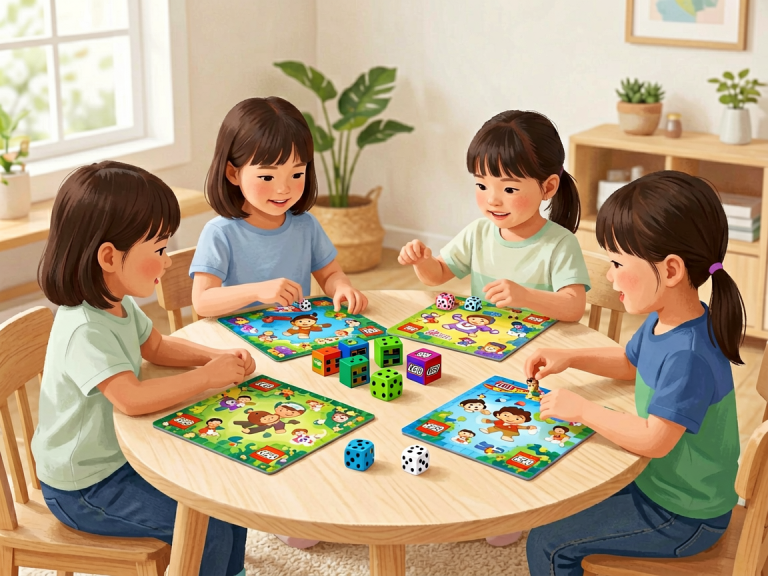
When multiple children play with a marble run, they naturally gravitate toward a shared objective: get the marble to the end. This fosters communication, negotiation, and division of labor. One child might focus on the starting ramp, another on the loops, and a third on the finishing area. They must coordinate their pieces and agree on a design. If the marble fails, they collectively diagnose the problem. This type of collaborative problem-solving is excellent for developing teamwork, patience, and the ability to give and receive feedback.
Building Sets: Parallel Play and Diverse Roles
Building sets often lead to parallel play or competitive building. Children may each construct their own creation side by side, occasionally sharing bricks or commenting on each other’s work. Alternatively, they may collaborate on a single large structure, but the lack of a strict goal can lead to disagreements about what to build. Some children prefer to build realistic things, others abstract. This can be a rich opportunity for learning social compromise, but it can also be more challenging without a unifying goal. Building sets also lend themselves to role-play: once a castle is built, children can act out stories with mini-figures. Marble runs have less role-play potential unless the marble is personified.
Age Suitability and Developmental Stages
The Case for Marble Runs from Ages 3 to 8
Simple marble runs with large pieces and shallow slopes are great for toddlers and preschoolers, helping them understand cause and effect and fine motor skills. As children grow, more complex sets with loops, switches, and multiple levels challenge their planning and patience. Around ages 6-8, marble runs can become quite sophisticated, introducing elements of competition (whose marble goes fastest?) or collaborative large-scale builds. However, after about age 9 or 10, the novelty may wear off unless the child is deeply interested in engineering or physics. The binary success/failure dynamic may feel repetitive to some.
Building Sets: Lifelong Appeal
Building sets have a much longer developmental arc. Wooden blocks are beloved from infancy through adulthood. LEGO, in particular, has sets for toddlers (Duplo) and for adults (Technic, Architecture, complex sets with thousands of pieces). The open-ended nature means that a child’s relationship with building sets can evolve: from simple stacking to following instructions to designing original creations to programming motorized models (with LEGO Mindstorms). Building sets can also be integrated with other interests—a child who loves dinosaurs can build a dinosaur skeleton; a child who loves space can build a rocket. This versatility makes building sets a timeless investment.
Combining the Two: Hybrid Creativity
An emerging trend is the combination of marble runs with building sets. For instance, LEGO-compatible marble run pieces allow a builder to integrate tracks into a LEGO castle, so the marble rolls through a fortress. Magnetic tile sets often include marble-like balls that roll along the tiles. These hybrid toys capitalize on the strengths of both: the structured physics of marble runs and the imaginative construction of building sets. For parents and educators, choosing a hybrid system may provide the best of both worlds.
Aesthetic and Emotional Appeal
The Satisfying Sensation of Motion
There is a deep, almost primal satisfaction in watching a marble roll smoothly through a track. The click as it lands on a ramp, the whoosh through a tunnel, the momentary pause at a switch—these sensory experiences are hypnotic. Many children (and adults) find marble runs calming and meditative. The continuous motion provides a sense of flow. Building sets lack this dynamic visual reward; the finished structure is static. While a LEGO castle is beautiful, it does not "do" anything unless the child animates it through play.
The Pride of a Completed Structure
Conversely, a completed building set creation—especially a large, complex one—can be displayed as a work of art. It becomes a source of pride. A marble run, however, is typically dismantled after a few runs because the fun is in the trial, not the product. Some marble run enthusiasts do keep elaborate setups, but they are fragile and take up space. Thus, building sets offer a more permanent sense of accomplishment.
Conclusion: Which Is Better?
The question of whether marble runs or building sets are superior is ultimately misguided. They serve different psychological and educational niches. Marble runs are unmatched for teaching physics through dynamic, failure-embracing play; they foster goal-oriented teamwork and provide immediate sensory gratification. Building sets excel at open-ended creativity, narrative development, and long-term engagement; they support divergent thinking and artistic expression. The ideal childhood toy collection includes both. Parents and educators should consider the child’s temperament: a child who thrives on clear challenges may gravitate toward marble runs; a child who loves storytelling and open exploration may prefer building sets. Better still, encourage both, and watch as the child learns to apply the structured engineering lessons of marble runs to the boundless imagination of building sets—and vice versa. In the end, play is not about choosing one path over another, but about building an entire world of possibilities.