Navigating Play: A Comprehensive Guide to Safe Toys for 11-Year-Olds
Introduction: Why Safety Still Matters at Age Eleven
At eleven, children stand at a fascinating crossroads. They are no longer toddlers who put everything in their mouths, nor are they fully independent teenagers. Their cognitive abilities have expanded dramatically, allowing for complex reasoning, strategic thinking, and creative problem-solving. They crave challenges, social interaction, and a sense of mastery. Yet paradoxically, this very developmental leap can expose them to new categories of risk that parents often underestimate. The toys marketed to this age group—drones, chemistry sets, electric scooters, and sophisticated building kits—can be thrilling, but they also introduce hazards ranging from chemical exposure to impact injuries and digital privacy breaches. Understanding what makes a toy truly safe for an 11-year-old requires moving beyond the simple "small parts = choking hazard" checklist of earlier childhood. It demands a nuanced assessment of physical durability, material composition, digital security, and psychological appropriateness. This article provides a thorough exploration of the key dimensions of toy safety for preteens, offering actionable guidance for parents, educators, and caregivers who want to foster enriching play without compromising well-being.
Physical Safety: Beyond Choking Hazards
1. Mechanical and Impact Risks
For eleven-year-olds, many of the most popular toys involve motion, speed, or force. Remote-controlled cars can reach speeds exceeding 20 miles per hour. Skateboards, scooters, and hoverboards are everyday companions. While these toys are not inherently dangerous, their safe use hinges on three factors: build quality, proper protective gear, and adult supervision. A poorly constructed hoverboard with substandard lithium-ion batteries can overheat and catch fire; a cheap skateboard with brittle plastic trucks can snap during a trick, sending the rider flying onto concrete. Parents should look for toys that meet recognized safety standards such as those from ASTM International (American Society for Testing and Materials) or the European EN 71 standard. For battery-powered ride-ons and personal mobility devices, certification from Underwriters Laboratories (UL) is critical. Additionally, any toy that involves projectiles—such as Nerf blasters, airsoft guns, or slingshots—must be evaluated for muzzle energy. Even "low-impact" foam darts can cause eye injuries if fired at close range. Safety glasses are a non-negotiable companion for such activities.
2. Chemical and Material Safety
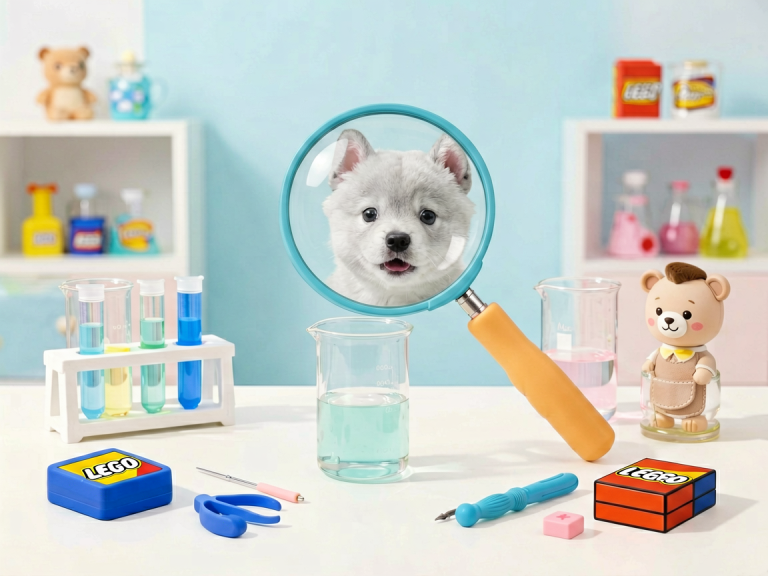
Eleven-year-olds are old enough to handle craft kits, chemistry sets, and modeling compounds, but not all products are created equal. A 2019 investigation by the advocacy group Safer Chemicals, Healthy Families found that several popular craft glues, paints, and modeling clays contained phthalates, lead, or formaldehyde-releasing preservatives. These substances can be absorbed through skin contact or inhaled as fine particles. When selecting art supplies, look for the AP (Approved Product) seal from the Art & Creative Materials Institute (ACMI), which certifies that the product is nontoxic. For chemistry sets, ensure they contain only household-safe chemicals such as baking soda, vinegar, and citric acid, and avoid sets that include volatile solvents, strong acids, or mercury. Similarly, slime-making kits—a perennial favorite among preteens—should be scrutinized for borax content. While borax is not acutely toxic in small amounts, chronic exposure can irritate skin and respiratory passages. Homemade slime using safe alternatives (such as cornstarch and contact lens solution) is often preferable to commercial kits with unlabeled ingredients.
3. Structural Integrity and Durability
The play patterns of eleven-year-olds are rough. They toss, drop, step on, and dismantle toys with an enthusiasm that would terrify a museum curator. A toy that shatters into sharp shards on impact is a safety liability. Plastic that contains BPA or other endocrine-disrupting compounds can degrade over time, leaching harmful chemicals. High-quality ABS plastic (acrylonitrile butadiene styrene) is widely considered safe and durable, whereas recycled plastics of unknown origin may contain contaminants. Mechanical joints on action figures, building sets, and robotic kits should be free of pinch points. Batteries, especially coin-cell lithium batteries found in many small electronic toys, must be secured behind a screw-fastened compartment to prevent ingestion, which can cause catastrophic internal burns. A 2020 study published in the journal *Pediatrics* found that emergency room visits for battery-related injuries among children aged 6–12 were rising, largely due to toys with easily accessed battery compartments.
Digital Safety: The Unseen Frontier of Toy Hazards
1. Connected Toys and Privacy Risks
By age eleven, children are often navigating the digital world with the confidence of a native but the judgment of a novice. "Smart" toys—voice-activated assistants in stuffed animals, internet-connected drones, and app-controlled robots—collect data. Some share that data with third-party advertisers, and worst-case scenarios involve breaches that expose a child's name, location, and voice recordings. In 2017, the Federal Trade Commission fined the maker of a "smart" doll for collecting and sharing children's voices without parental consent. Parents should research the manufacturer's privacy policy before purchasing any connected toy. Look for toys that store data locally (on the device itself) rather than in the cloud, and disable any unencrypted Bluetooth or Wi-Fi features when not in use. The European Union's GDPR-K (General Data Protection Regulation for children) offers stronger protections, but for families outside the EU, vigilance is paramount. A simple rule: if a toy asks for a child's name, birthdate, or location, it requires a conversation about data privacy.
2. Screen Time and Cognitive Overload
Many toys marketed to eleven-year-olds are essentially screens in disguise. Digital game consoles, virtual reality headsets, and augmented reality play sets blur the line between toy and device. While these tools can be educational, they also pose risks of eye strain, sleep disruption, and reduced physical activity. The American Academy of Pediatrics recommends no more than two hours of recreational screen time per day for children ages 6 and older, but many toys encourage far longer engagement. A safe toy in this category is one that includes built-in timers, breaks, or physical movement requirements. For example, VR games that require full-body movement (like boxing or dancing) are safer than those that confine a child to a chair. Additionally, blue-light filtering glasses or apps that shift the screen's color temperature in the evening can mitigate melatonin disruption. Ultimately, the safest approach is to insist that digital toys complement, not replace, real-world activity.
Developmental Appropriateness: Emotional and Social Safety
1. Age-Appropriate Content and Complexity
A toy that is physically safe can still be emotionally harmful if its content is frightening, frustrating, or inappropriate. Eleven-year-olds are capable of handling mild suspense and complex rules, but they are also vulnerable to anxiety triggered by gory imagery, intense competition, or social exclusion. Board games that involve strategy and cooperation (such as Settlers of Catan, Ticket to Ride, or cooperative escape-room games) are excellent choices because they build social skills without humiliating losers. Conversely, games that rely on "player elimination" can lead to hurt feelings and conflict. Video games should be vetted for online chat features; unsupervised multiplayer lobbies expose children to cyberbullying, predatory language, and toxic behavior. The Entertainment Software Rating Board (ESRB) ratings are a useful starting point, but parents should also read user reviews and watch gameplay videos. For building kits and STEM toys, ensure the instructions are clear enough that a child can succeed without constant adult intervention. A toy that is too difficult leads to frustration and abandonment; one that is too simple leads to boredom. Both scenarios can undermine a child's sense of competence.
2. Encouraging Independent Play vs. Over-Supervision
There is a subtle safety consideration surrounding the degree of adult involvement. Overly complex toys that require constant parental assembly or troubleshooting can rob children of autonomy—which is critical for developing confidence and self-regulation. On the other hand, toys that demand zero supervision can leave children isolated. The safest toys in this age range are those that strike a balance: they enable independent exploration but include fail-safes. For example, a high-quality kite with a sturdy spool and a safety release mechanism allows a child to fly alone, but the parent can easily step in if the wind shifts dangerously. A chemistry set with pre-measured, labeled reagents eliminates the risk of mixing the wrong quantities, while still allowing the child to perform the experiment independently. Parents should also be aware of "adventure toys" such as climbing ropes, tree swings, and zip lines. These require not only proper installation (following manufacturer guidelines) but also routine inspection for wear and tear. A tree swing that has been hanging for a year may have frayed ropes or a rotted branch that cannot support a growing preteen's weight.
Conclusion: A Holistic Approach to Toy Safety
The safest toy for an eleven-year-old is not the one wrapped in the most layers of warning stickers. It is the one that aligns with the child's maturity, interests, and physical capabilities, while being held to rigorous standards of material quality, mechanical design, and digital integrity. Parents should adopt a critical mindset: read labels, research manufacturers, watch unboxing reviews, and test toys themselves before handing them over. More importantly, they should have open conversations with their children about the risks—why certain chemicals are dangerous, why sharing personal information with a toy's app is a bad idea, why wearing a helmet on a scooter is nonnegotiable. By doing so, adults transform toy selection from a passive purchase into an active lesson in risk assessment, responsibility, and self-care. The goal is not to eliminate all danger—a completely risk-free childhood is neither possible nor desirable—but to equip eleven-year-olds with the tools they need to navigate the world of play with confidence and caution. In that sense, the safest toy of all is the one that teaches a child how to be safe.