The Power of Play: Top Learning Toys for 10-Year-Olds to Foster Growth and Curiosity
At the age of ten, children stand at a fascinating crossroads of development. They have outgrown the simple cause-and-effect play of early childhood, yet they are not quite teenagers immersed in abstract reasoning. This is the golden age of curiosity, where the brain is highly plastic, and the desire for autonomy and challenge grows rapidly. Learning toys designed specifically for 10-year-olds can bridge the gap between fun and education, nurturing skills like logical thinking, creativity, collaboration, and resilience. In a world increasingly shaped by technology and complex problem-solving, providing the right playthings can spark lifelong passions. This article explores a curated selection of learning toys that engage, inspire, and educate 10-year-olds, offering parents and educators a roadmap to purposeful play.
Why Learning Toys Matter at Age 10
Many parents wonder whether “educational toys” are still necessary by the time a child reaches fourth or fifth grade. The answer is a resounding yes, but the nature of these toys must evolve. At ten, children are capable of multitasking, understanding rules with multiple layers, and reasoning about hypothetical situations. They also begin to form stronger peer relationships and enjoy cooperative play. Learning toys for this age group should therefore emphasize strategy, problem-solving, and open-ended exploration rather than rote memorization. Research in developmental psychology shows that hands-on learning—where children manipulate objects, test hypotheses, and iterate—significantly outperforms passive instruction in building long-term retention and transferable skills. Moreover, toys that allow for failure without severe consequences teach grit and a growth mindset. When a 10-year-old builds a bridge that collapses or a robot that doesn’t move, they learn to diagnose errors and try again—an invaluable lesson for academic and real-life challenges.
STEM Building Kits: Engineering the Future
Mechanical and structural engineering
STEM (Science, Technology, Engineering, Math) building kits are arguably the most powerful category of learning toys for 10-year-olds. Unlike simple snap-together blocks for younger kids, advanced kits like those from *K’NEX*, *Engino*, or *LEGO Technic* introduce gears, pulleys, motors, and even programmable sensors. For example, a 10-year-old can follow blueprints to construct a functioning crane or a wind turbine, learning principles of torque, leverage, and energy transfer. The act of assembling complex mechanical parts requires spatial reasoning, patience, and the ability to follow sequential instructions—a precursor to coding logic. Many kits also encourage modification: after building the base model, children are prompted to redesign it for greater stability or speed. This open-ended challenge mirrors the engineering design process used by professionals. A notable product is the *Thames & Kosmos Structural Engineering: Bridges & Skyscrapers* set, which lets kids test loads on different bridge designs, introducing concepts of compression and tension through physical experimentation.
Electricity and circuitry
Another standout in STEM is circuitry toys. *Snap Circuits* remain a classic because they allow children to build working radios, alarms, and light shows without soldering. By age ten, kids can progress to more advanced kits like *littleBits* or *Makey Makey*, which integrate with everyday objects. A 10-year-old can turn a banana into a piano key or create a game controller out of Play-Doh. Such projects demystify electronics and spark a sense of wonder: suddenly, the abstract flow of electrons becomes tangible. These toys also encourage troubleshooting—if the light doesn't turn on, the child must systematically check connections, fostering analytical thinking.
Coding and Robotics: Digital Literacy in Action
From block-based to text-based coding
Ten-year-olds are at the ideal age to transition from visual, block-based coding (like Scratch) to text-based languages such as Python. Robotic kits provide the perfect physical context. *Lego Mindstorms Robot Inventor* and *Sphero BOLT* are leading examples. With *Mindstorms*, children build a robot from hundreds of pieces and then program it using a drag-and-drop interface that gradually reveals the underlying code. They can program the robot to follow a line, avoid obstacles, or dance—each mission requiring logical sequencing, loops, and conditionals. As their confidence grows, the kit allows them to edit raw text code. Similarly, *Sphero BOLT* is a programmable robotic ball that uses a phone or tablet. Kids can write programs that make the ball change colors, roll in patterns, or respond to tilt. The immediate feedback—seeing the robot move exactly (or not) as instructed—makes abstract coding concepts concrete.
Unplugged activities
For families who want to introduce coding without screens, board games like *Robot Turtles* or *Code Master* teach programming logic through cards and tokens. In *Code Master*, players drag a character through a maze by writing a sequence of moves, developing algorithmic thinking without a single line of code. These games are excellent for siblings or parent-child play, building communication and negotiation skills.
Strategy Board Games: Critical Thinking and Social Skills
Deepening reasoning through competition and cooperation
Board games are a timeless learning tool, but 10-year-olds are ready for complex mechanics that involve resource management, deduction, and multi-turn planning. *Settlers of Catan* (Junior version or the original) requires players to trade resources and build settlements, teaching probability, negotiation, and strategic flexibility. *Ticket to Ride* introduces route optimization and risk assessment. *Codenames* challenges vocabulary and lateral thinking. Cooperative games like *Forbidden Island* or *Pandemic* require players to work together against the game itself, fostering communication and shared decision-making. These games also develop emotional regulation: losing gracefully, waiting for one’s turn, and handling unexpected setbacks are all part of the learning process. For a 10-year-old who struggles with attention, games like *Blokus* (a spatial puzzle game) provide quick, engaging rounds that demand concentration.
Math and logic-focused games
Dedicated math games can combat the common aversion to arithmetic. *Prime Climb* is a colorful board game where players move by adding, subtracting, multiplying, and dividing to land on prime positions. It turns math drills into a racing adventure. *Qwirkle* combines colors and shapes with pattern recognition, akin to a simplified Scrabble without letters. *Rush Hour* is a logic puzzle where players slide cars to free a red car from a traffic jam—an excellent exercise in sequential reasoning and flexibility.
Science Experiment Kits: Hands-On Discovery
Chemistry, physics, and biology in a box
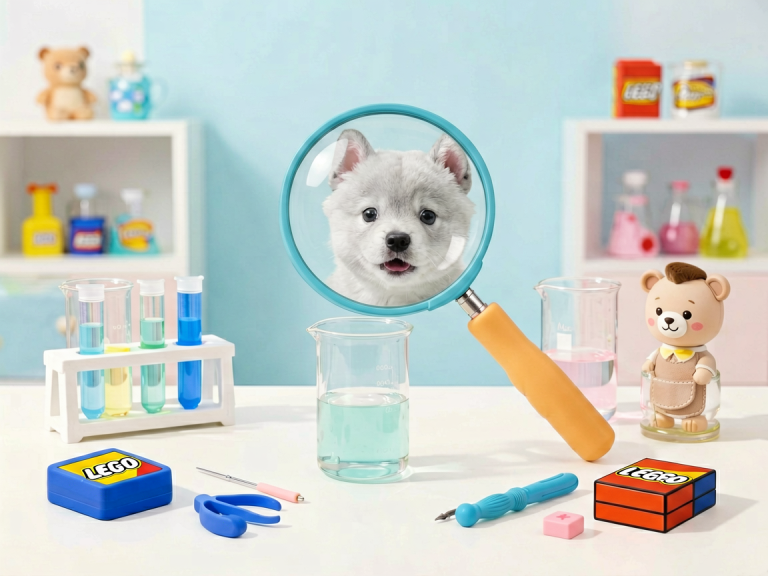
Ten-year-olds have the attention span and manual dexterity to conduct meaningful experiments. Science kits from *Thames & Kosmos*, *National Geographic*, and *Mel Science* provide everything from crystal growing to DNA extraction. The *Thames & Kosmos Chem C2000* kit contains over 250 experiments, including building a fuel cell, making a volcano, and exploring acids and bases. What sets quality kits apart is the inclusion of clear, safety-conscious instructions and real scientific explanations. Children learn not just to follow steps, but to ask “why?”—for instance, why does baking soda fizz when mixed with vinegar? They also learn the scientific method: hypothesize, test, observe, conclude. Some kits now incorporate an augmented reality component, allowing children to see molecular models through a phone app. For biology enthusiasts, *Grow-A-Frog* or *Ant Farm* kits provide long-term observation opportunities, teaching responsibility and the cycles of life.
Outdoor and nature exploration
Not all learning happens indoors. *Nature Explorer Kits* with magnifying glasses, bug catchers, and field guides encourage 10-year-olds to document local ecosystems. *National Geographic’s Rock Tumbler* teaches patience over weeks as rough stones are polished into gems. Combining outdoor exploration with journaling can foster a lifelong appreciation for science and the environment.
Creative Arts and Crafts: Imagination Meets Skill
From crafting kits to digital art tools
While STEM is critical, the arts are equally vital for developing fine motor skills, emotional expression, and innovation. At age ten, children can handle more sophisticated art supplies: watercolor paint sets, sewing machines (child-safe), pottery wheels, or knitting looms. *Klutz* and *Creativity for Kids* produce step-by-step craft kits for making friendship bracelets, clay figurines, or tie-dye shirts. These activities require following instructions, but also leave room for creative twists. Digital art tools like *Procreate* on an iPad or drawing tablets give children a modern canvas. Learning to use layers, brushes, and color theory on a tablet parallels digital literacy.
Music and performance
Learning an instrument or composing music is a profound cognitive workout. Simplified electronic keyboards with light-up keys (like *One Smart Piano*) or percussion kits (*Boomwhackers*) make music accessible. Alternatively, *Osmo’s Coding Jam* blends music with coding: children arrange blocks to create tunes. Performance-based toys, such as *Karaoke machines* or *Play Theater* sets, build confidence in public speaking and storytelling.
Choosing the Right Toy: Tips for Parents
With so many options, selecting the perfect learning toy for a 10-year-old can feel overwhelming. The following criteria can guide decision-making:
Align with current interests
A child obsessed with dinosaurs will engage more with a Fossil Dig Kit than with a chemistry set. Observe what naturally captures their attention. If they love Minecraft, consider a *Minecraft-themed coding kit* (e.g., *Ravensburger’s Minecraft Builders & Biomes* board game) that extends their interest into offline learning.
Balance difficulty
Toys that are too easy will bore; those that are too hard will frustrate. Look for “flow” toys—those that challenge just above the child’s current skill level, with incremental complexity. Many kits, like *LEGO Boost*, offer progressive builds from simple to complex.
Prioritize open-endedness
A single-use project (e.g., a pre-molded plastic model) offers limited learning. Instead, choose toys that allow repetitive play with variation. Magnetic building tiles (like *Magna-Tiles*), marble runs, or modular robotics kits provide endless configurations.
Include social elements
Learning occurs in context. Toys that invite multiple players—board games, team coding challenges, or cooperative science experiments—teach collaboration, negotiation, and empathy.
Screen time balance
While many learning toys involve apps, aim for a mix of screen-free options. Analog toys (card games, craft kits, architectural blocks) provide a break from blue light and encourage tactile engagement.
Conclusion
Learning toys for 10-year-olds are far more than distractions—they are tools for building the cognitive, social, and emotional architecture of adolescence. By selecting toys that combine challenge with joy, parents can turn play into a powerful classroom. Whether it’s a budding engineer wiring a circuit, a future programmer debugging a robot, or a young artist weaving a tapestry, each toy offers a doorway to deeper understanding. The key is to provide variety, respect the child’s autonomy, and celebrate the process rather than the product. In a world that increasingly demands creativity, critical thinking, and collaboration, the right learning toy is an investment in a child’s limitless potential. So next time you shop for a birthday or holiday gift, consider a learning toy that lets a 10-year-old’s imagination and intellect grow—because the best play is the one that never stops teaching.